
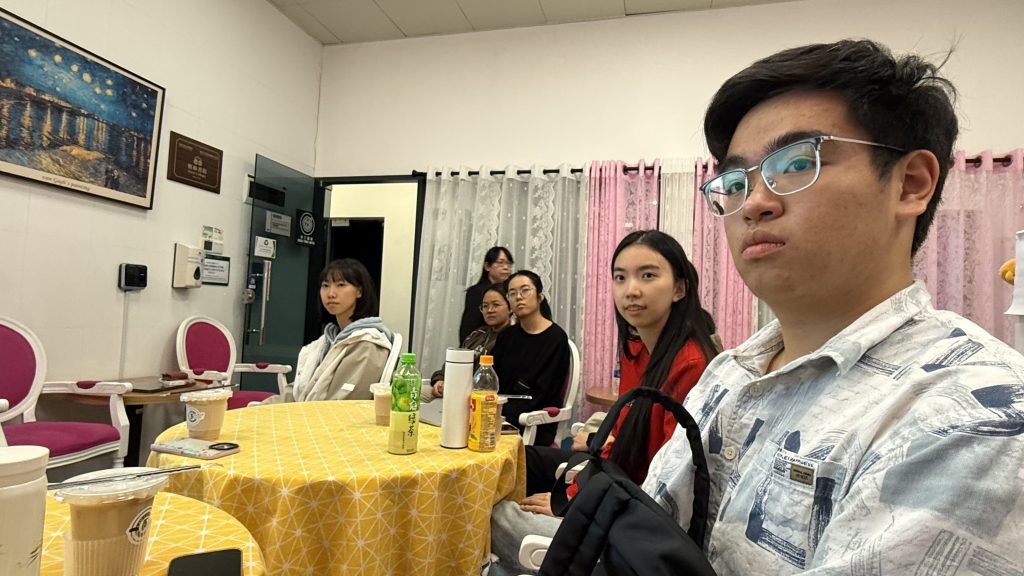
On a winter evening, the “Double Three Café” at Ma Man Kei and Lo Pak Sam College, University of Macau—was suffused with the delicate fragrance of osmanthus. As students prepared coffee, they awaited the opening of a dialogue-style lecture.
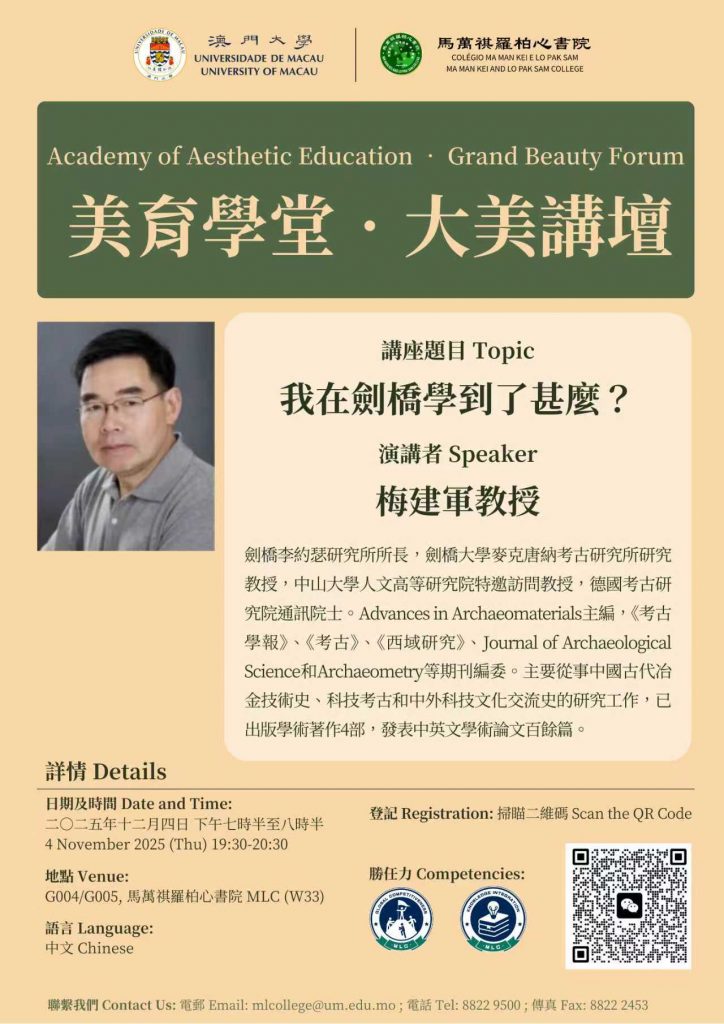
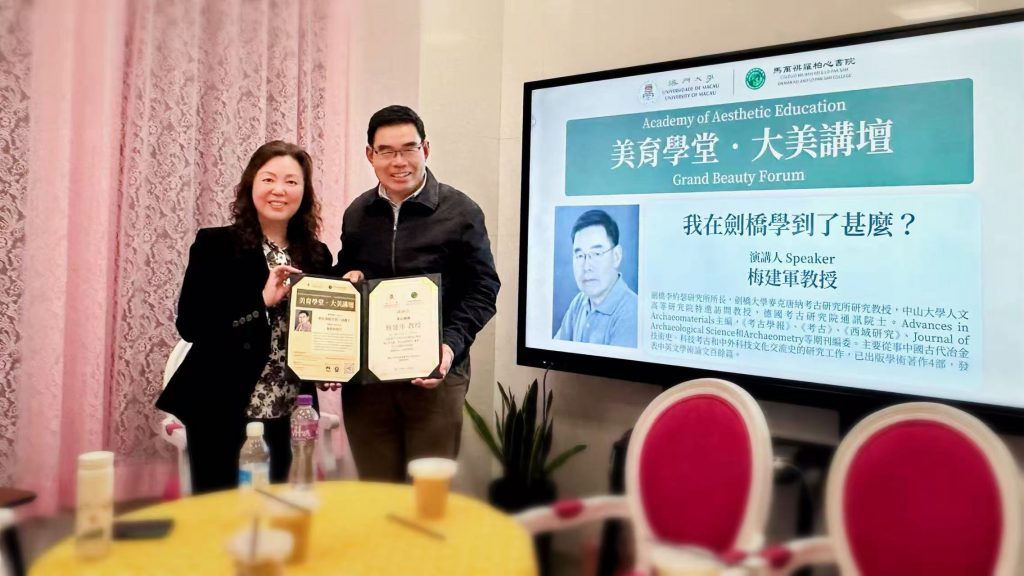
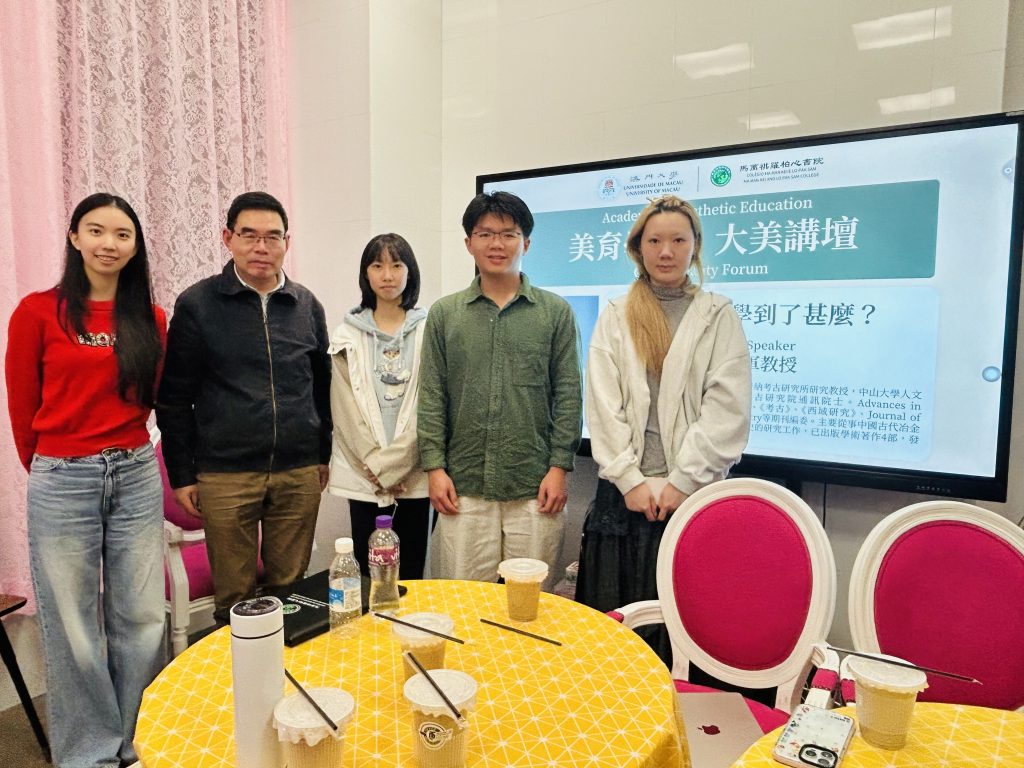
This story happened on the evening of December 4, 2025, Ma Man Kei and Lo Pak Sam College (MLC) invited Professor Mei Jianjun of the University of Cambridge to deliver this session of the Academy of Aesthetic Education · Grand Beauty Forum. The lecture, titled “What Did I Learn at Cambridge?”, was met with an energetic response, attracting academic staff and students.
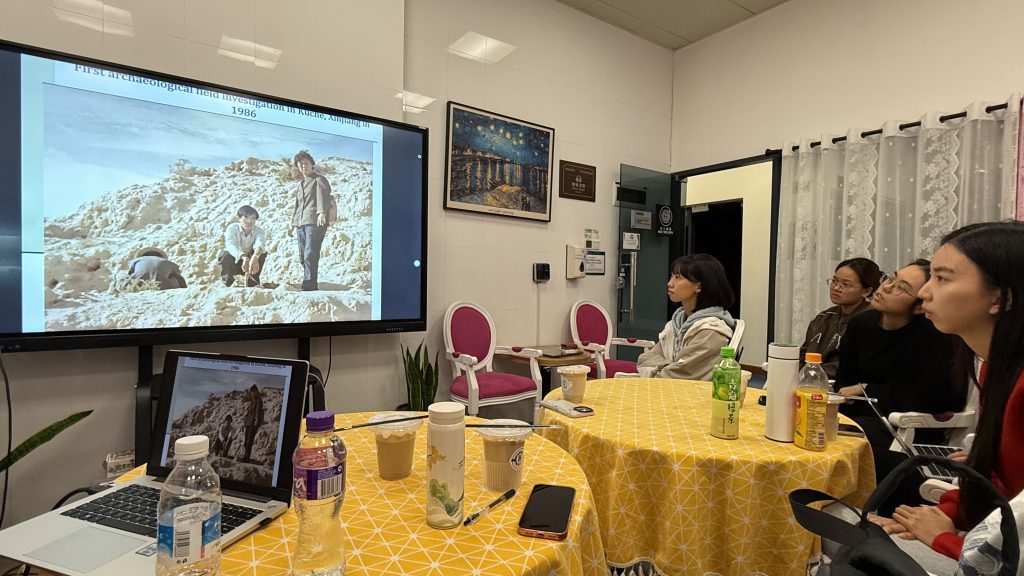
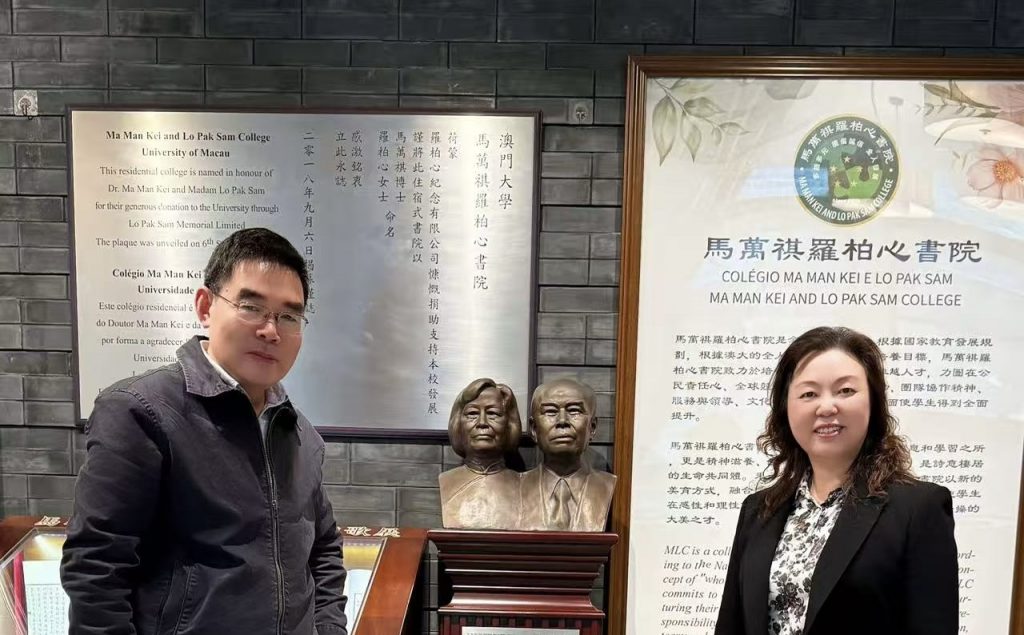
Professor YANG Liu, the College Master, delivered welcoming remarks and, on behalf of the College, extended a warm welcome to Professor Mei. Professor Mei currently serves as Research Professor at the McDonald Institute for Archaeological Research, University of Cambridge, and Director of the Needham Research Institute. He is also a specially appointed Visiting Professor at the Institute for Advanced Studies in Humanities, Sun Yat-sen University, and a Corresponding Member of the German Archaeological Institute. A world-renowned archaeologist and leading scholar in scientific research, he has published an extensive academic books and essays and achieved distinguished acclaim.
Independence, Internationality and Responsibility
Professor Mei opened by posing a central question: What did I learn at Cambridge? His response was threefold: independent thinking, an international outlook, and social responsibility.
He noted that his years at Cambridge led him to a deep appreciation of the indispensability of independent thought. He mentioned that when he entered the University, he encountered many difficulties and confusions in terms of research materials and directions. But it was from then on that he gradually developed his ability to think independently and seek resources in different institutions. In an age of ceaseless information flows, young people, he argued, must preserve clarity of judgment—neither succumbing to blind conformity nor drifting with prevailing currents—and engage a complex world through disciplined, rational reflection.
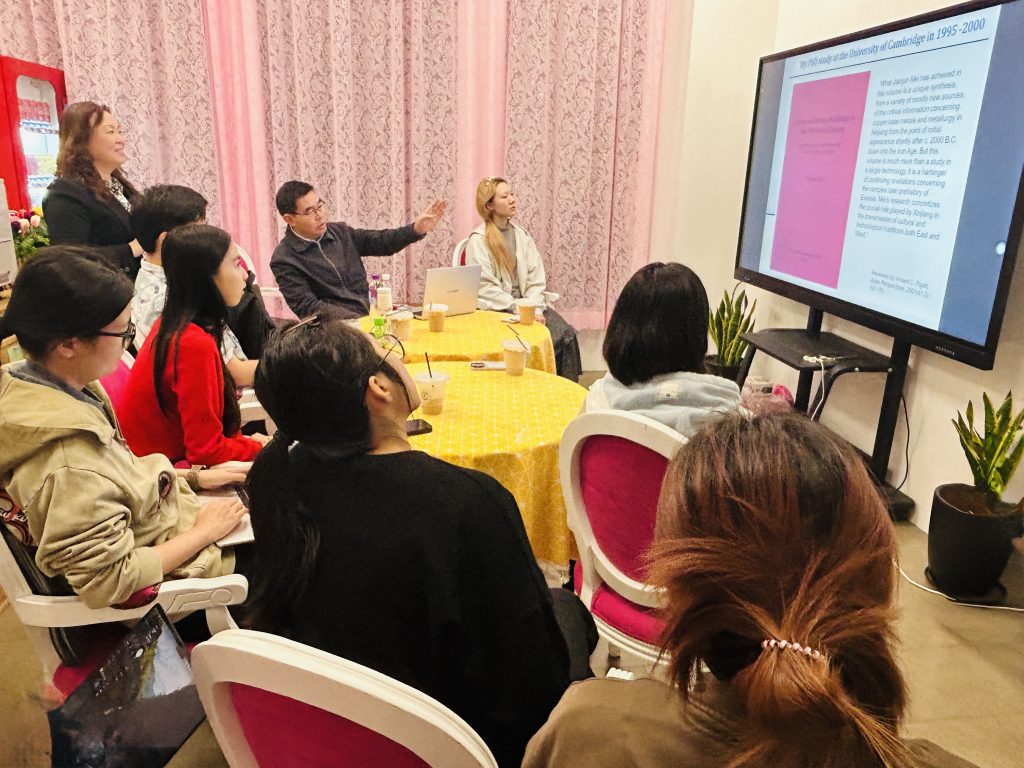
Turning to the notion of an international perspective, Professor Mei stressed that “going global” is not synonymous with seeking total assimilation, but rather with cultivating effective communication grounded in understanding and respect for difference. Drawing on his experiences in cross-cultural settings, he observed that the true value of international education lies in building bridges that enable a fuller comprehension of the world. He further invoked the scholarly tradition of the Needham Research Institute, underscoring that intellectual openness and a lifelong commitment to social responsibility constitute the essential impetus for the advancement of knowledge and the deepening of mutual learning among civilizations.
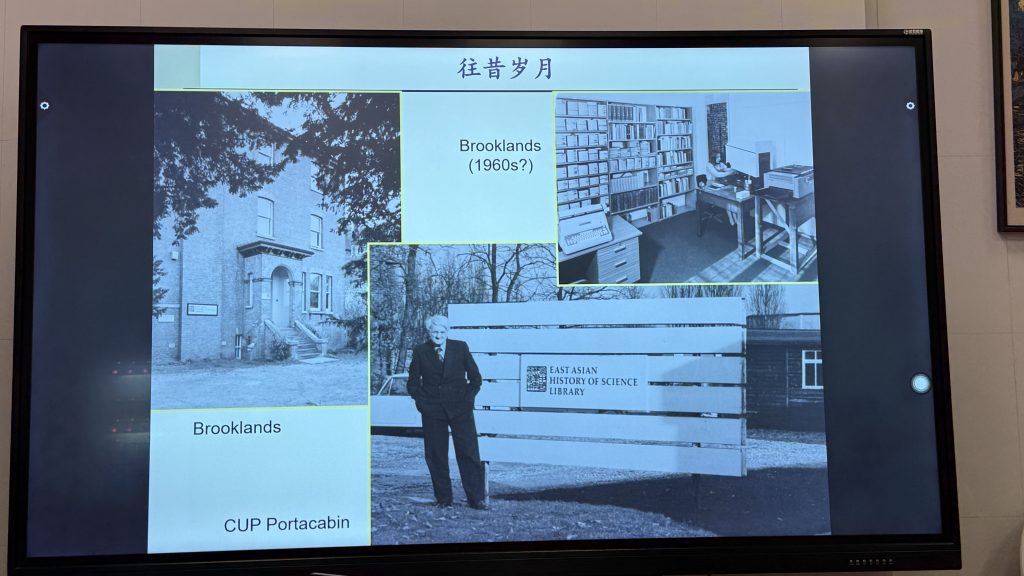
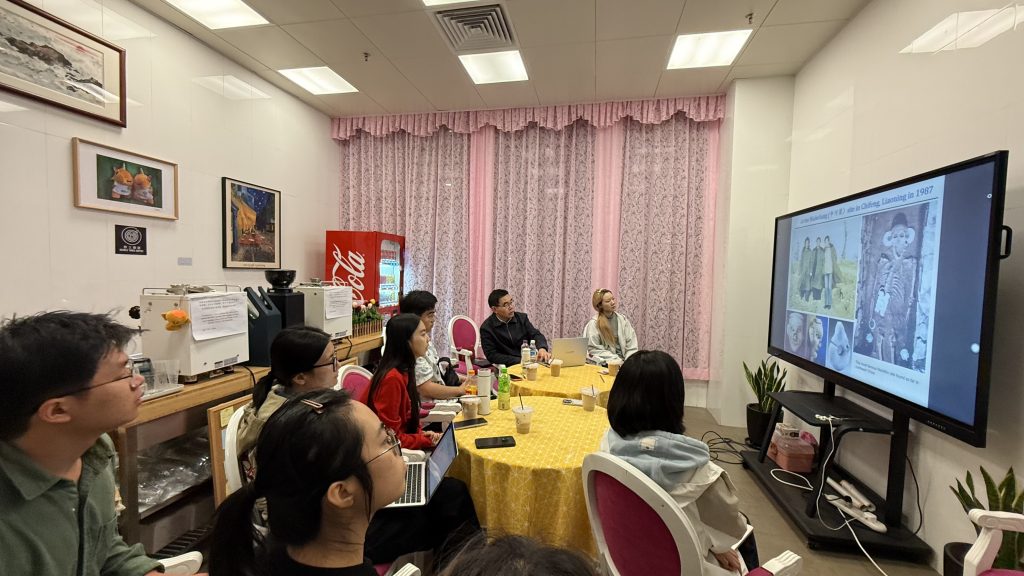
When exploring research on the history of metallurgy and materials, Professor Mei extended the discussion to the mission and responsibility of Chinese scholars in the contemporary era. He shared touching stories related to Joseph Needham and the Needham Research Institute. Needham’s arduous research journey and tremendous achievements concerning China’s scientific and technological traditions and their contributions to the world deeply moved the students. He encouraged students to devote themselves to research and social service with a broader perspective and long-term academic aspirations. Professor Mei particularly spoke of how, when he first joined the Needham Research Institute, the institute was in great difficulty; with the help of all staff members and many donors, the institute now has abundant resources and sponsorship and can support researchers from countries around the world. At present, follow-up publications on Needham’s studies, as well as research on the history of science-and-technology translation related to Needham, are being planned and implemented, and are expected to achieve further expansion in the future.
Resonance and Inheritance of Great Love
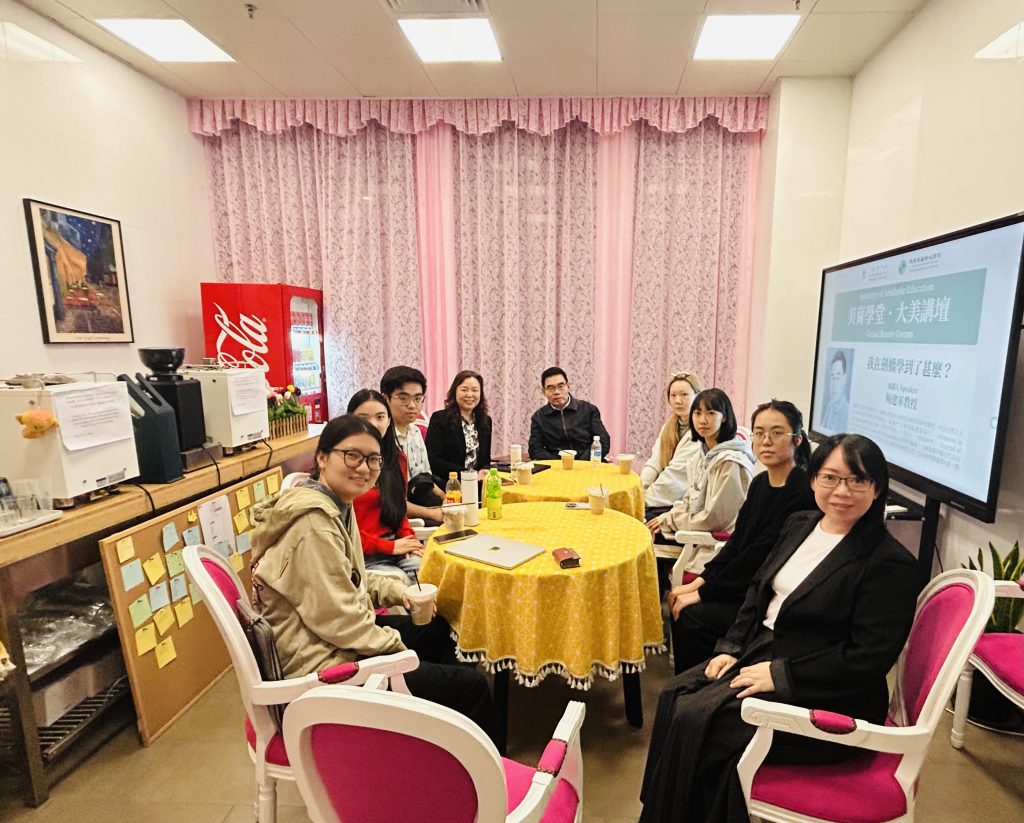
During the dialogue, Master YANG introduced to Professor Mei the seven competencies the college is committed to cultivating in students, and pointed out that although Macau and Cambridge have different cultural backgrounds, both share educational philosophies that emphasize whole-person development, social responsibility, and the cultivation of a global perspective and critical thinking. Master YANG also mentioned that the donors of the college—Mr. Ma Man Kei and Ms. Lo Pak Sam and their family—have long supported Macau’s education and devoted themselves to the nation and Macau society. Their spirit of great love aligns with Dr. Needham’s selfless dedication. Professor Mei expressed deep agreement and appreciation, this is really a resonance and inheritance of Great Love of the two institutions.
Rethinking Dialogue between Teachers and Students
In the interactive session, Prof. Mei and students raised incisive questions, making the discussion even more vivid. Below is the dialogue record, highlighting the sparks created by the collision of Professor Mei’s wisdom and the students’ rethinking.
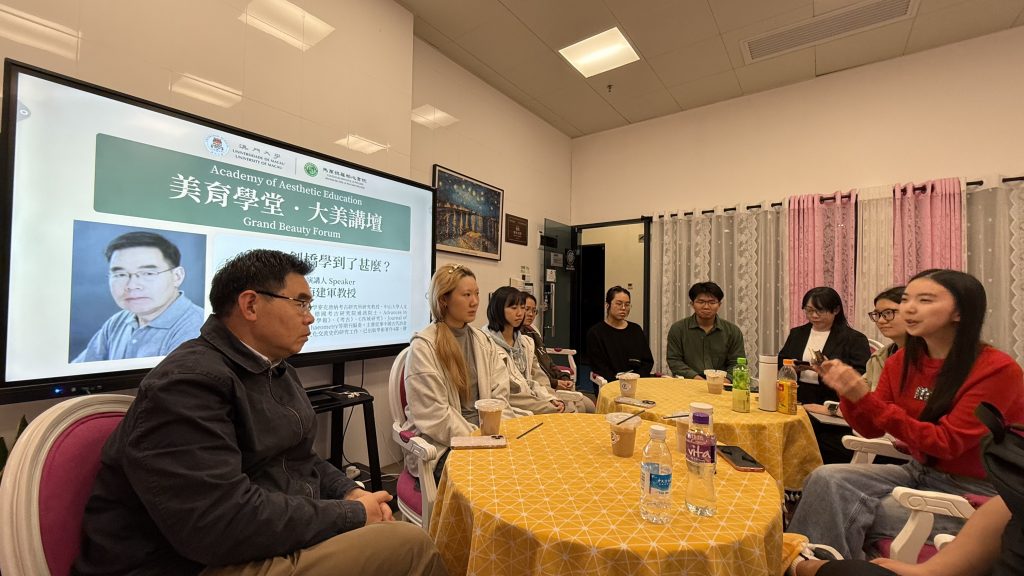
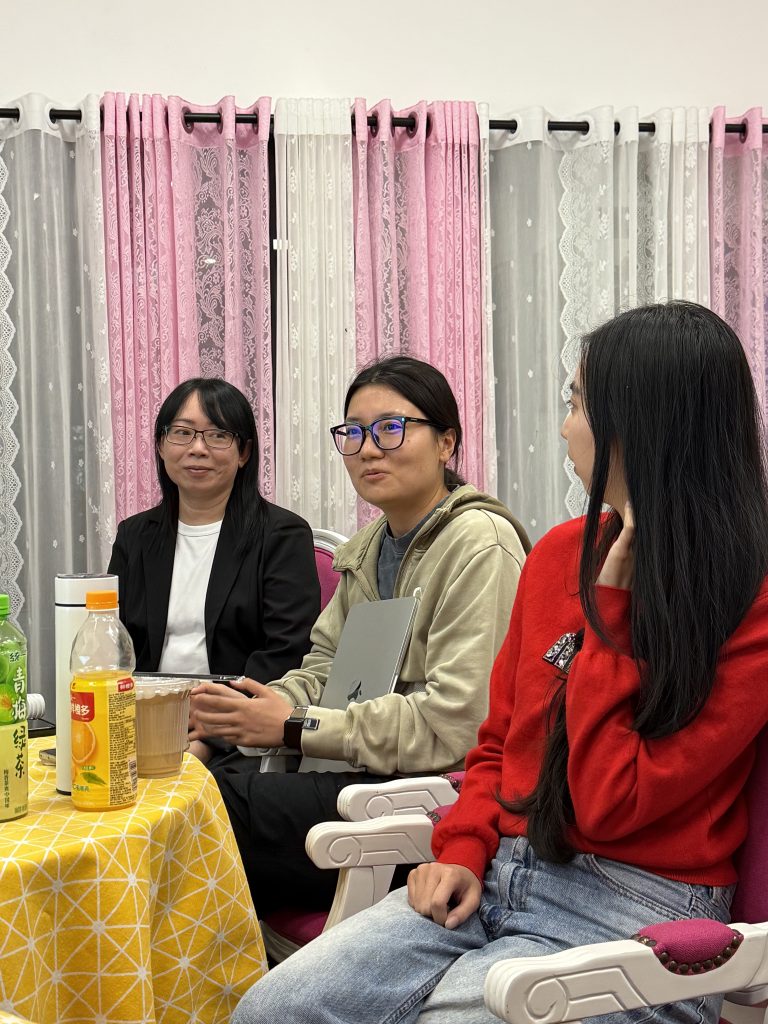
Zhang Chenglu: Hello, Professor Mei! Thank you for your wonderful speech! You previously mentioned that studying at Cambridge is a valuable opportunity to cultivate an international perspective. But for me and many students, no matter which international institution we go to, we will involuntarily—consciously or unconsciously—tend to socialize, study, and communicate with students from our own country. It’s not only a language issue but also a psychological inclination. How can we break through this barrier, seize the opportunity, and broaden our international perspective?
Professor Mei: Very good question! This problem is indeed very common. For myself, when I attend some conferences, I also find that scholars from my own country tend to communicate with fellow countrymen. To break through this tendency, you must consciously engage with people from different backgrounds. Simply waiting for external factors to intervene and give you an international perspective will not work; you have to take the initiative and step forward. Only then can language barriers and psychological barriers gradually become thinner in communication, until they disappear.
Professor Mei: I have a question for you. In this age of AI, I really want to hear your views on the use of AI.
Zhang Chenglu: I major in business administration and will later branch into business economics. Therefore, in my professional field, competition in AI technology is very intense. But personally, I think technology is ultimately a tool. There is no need for us to engage in ineffective competition with AI in terms of computing power; what we need is foundational understanding. More importantly, we should cultivate competitiveness in areas that AI cannot obtain. Because AI is developed by humans, it will always be one step slower than humans. Human consciousness will first realize what abilities need to be acquired in which fields, and then AI will follow up. Therefore, what I should do is cultivate competitiveness in areas that AI cannot master, rather than spending limited time chasing algorithms.
Professor Mei: This is really an independent thinking!
Huang Yaomin: Prof. Mei, thank you very much for sharing with us. Regarding the research on mutual learning among civilizations that you mentioned about Joseph Needham and your own research direction, I would like to ask you: for you, what does the word “civilization” mean? Or, how do you view the concept of “civilization”? I am a second-year history student. In last semester’s Western Civilization History course, the professor traced the origin of the term “civilization” from his own criticising angle. In a general-education course on Chinese philosophy, the professor analysed the origin and applicability of the two Chinese characters “文明” (civilization) in the Chinese context. I would really like to know your view.
Professor Mei: This is a very good question, but to talk about it properly would take some time. Briefly speaking, my understanding of civilization is: anything related to humanity’s technology and great achievements, and the knowledge generated through interaction with nature, can be called civilization. Regarding critiques of civilization, we need to acknowledge that, within theoretical frameworks, this term is not an especially ideal concept. If you carefully observe current international English academic journals, the word “civilization” actually appears very rarely. In fact, if you submit an article to these journals that includes “civilization,” basically you won’t get a response. However, in the Chinese context, as you mentioned in your general-education course, this term has its own lineage and meaning. In China, this term has been used for a long time, and it is difficult to change it or find substitutes. Moreover, merely discussing this word is meaningless; it is hard to reach consensus. Therefore, as a responsible professor, besides analysing civilization theory, what I need to tell you is how this concept is used in our research practice, and where the gap between theory and reality lies. That is the responsible attitude. Sorry for not answering directly (laughs).
Huang Yaomin: Oh, No—your answer is very inspiring. It made me realize the situation and meaning of the concept of civilization in practice. Thank you very much for your explanation!
Professor Mei: What majors are you all in?
Bao Rong: I am a doctoral student in the Chinese Department.
Professor Mei: Oh, within my knowledge, the college is a place where undergraduates live and study—how can there be a doctoral student here?
Bao Rong: As a doctoral student, I am stationed in the college as a student leader, living, learning, and growing together with undergraduates, and helping the undergraduates with academic support, pastoral care and large activities. Thanks to the practice of UM RC system.
Master YANG: In UM RC system, the College Master, Associate Master, and all Resident Fellows live in the college together with the students, accompanying them day and night. This allows them to provide all-round care and guidance and to stay attentive to everyone’s growth dynamics at all times. The group of student leaders including HA, RA and RT, is committed to assisting the college management team in organizing rich activities and daily management, helping to realize whole-person development. Bao Rong is an RT, i.e. Resident Tutor, she has done an excellent performance.
Professor Mei: Great! This shocks me!
(Coming back to it, Bao Rong, what exactly is your research direction?)
Bao Rong: I began by studying data science and linguistics, and later also studied economics. My current research direction is cognitive linguistics, focusing on differences in Chinese–English word order. Starting from surface linguistic phenomena, I explore the differences in underlying cognitive patterns, and trace the deep divisions between Chinese and Western culture and philosophical concepts.
Professor Mei: Exploring Chinese culture from an interdisciplinary perspective—this is very interesting. What is the biggest discovery you have gained in your research?
Bao Rong: Using interdisciplinary theories and knowledge, I confirmed the correctness and true value of my supervisor’s much-criticized theory!
Professor Mei: That’s remarkable!
Students, your discussion and rethinking is very insightful and extraordinary. I believe that in the future you will all shine in your respective fields and achieve outstanding accomplishments. Everyone is welcome to come to Cambridge for exchange! I’ll be waiting for you in Cambridge!
This lecture and dialogue triggered enthusiastic responses among the college’s academic staff and students. It not only broadened students’ intellectual horizons, but also deepened students’ understanding of the educational model of the renowned Cambridge University, as well as their understanding of social responsibility and cross-cultural communication. Ma Man Kei and Lo Pak Sam College will continue to guide students to devote themselves to learning and practicing with a world-embracing outlook and a sense of responsibility for society, cultivate the character of independent thinking, and become pillars beneficial to society and the nation.
[Article: Bao Rong Proof: Venus, Rosie Photos: Rosie, Venus]